Why Japanese Temples and Shrines Look Similar — But Mean Different Things
Visitors to Japan often notice something confusing.
They see wooden gates, stone paths, lanterns, and quiet sacred spaces. People bow, clap their hands, or light incense.
But many visitors are unsure about one thing.
Is this a shrine, or a temple?
To many foreigners, the difference is not obvious. Both appear traditional. Both appear spiritual. Both appear frequently in anime.
Yet they belong to two different religious traditions.
Understanding the difference reveals something important about Japanese culture.
1. Shrine vs Temple
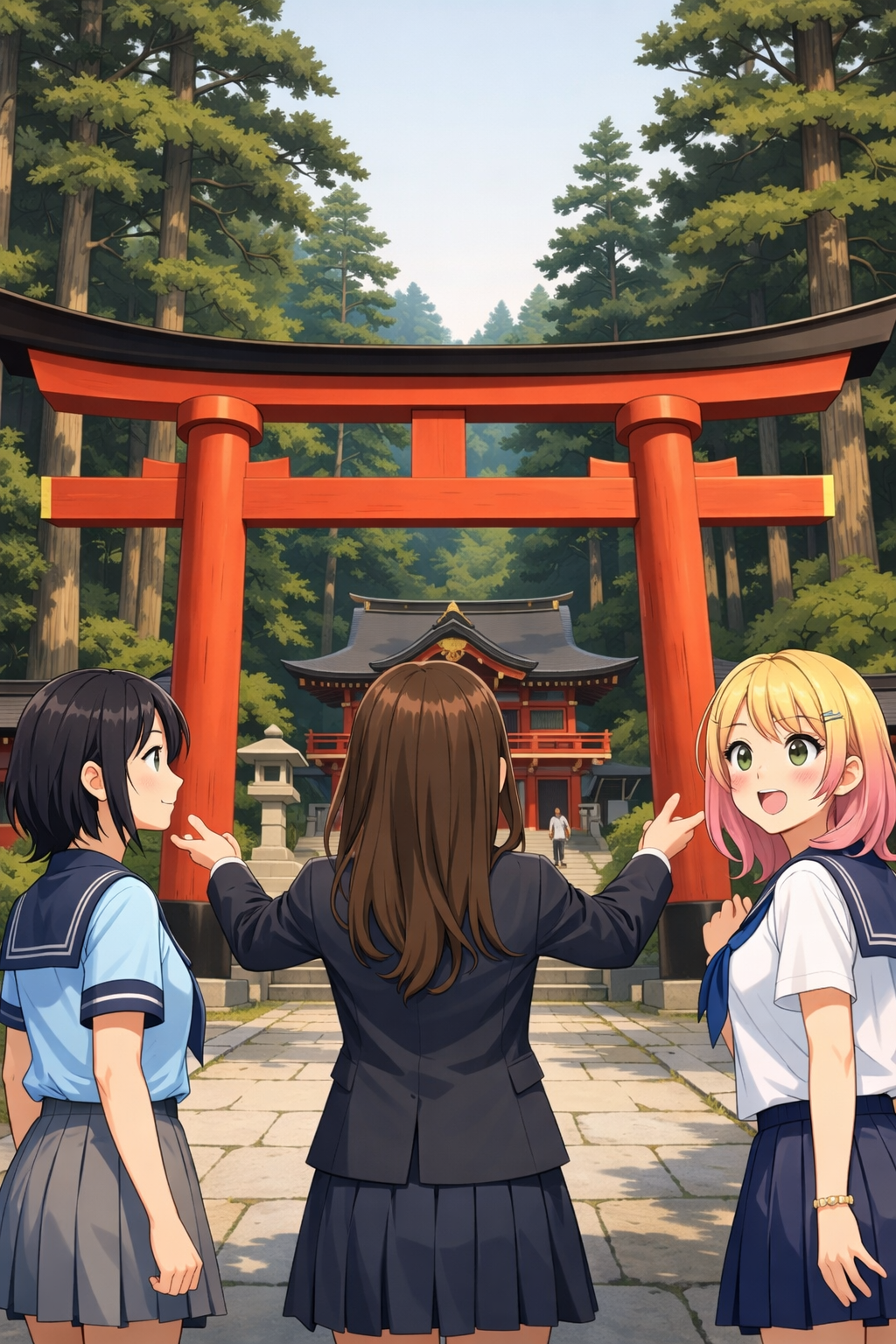
A torii gate marking the entrance to a Shinto shrine in Japan.
The easiest way to distinguish the two is by architecture.
A Shinto shrine usually includes elements such as:
- torii gates
- purification basins
- wooden shrine buildings
- natural surroundings like forests or mountains
The torii gate is especially important. It marks the boundary between the ordinary world and a sacred space connected to the kami.

Visitors performing the purification ritual at a Shinto shrine in Japan.
A Buddhist temple, on the other hand, often includes:
- large main halls
- pagodas
- Buddhist statues
- incense burners
Temple complexes tend to feel more architectural and structured. Shrines often emphasize nature and open space, while temples emphasize buildings and symbolic structures.
2. Shinto vs Buddhism
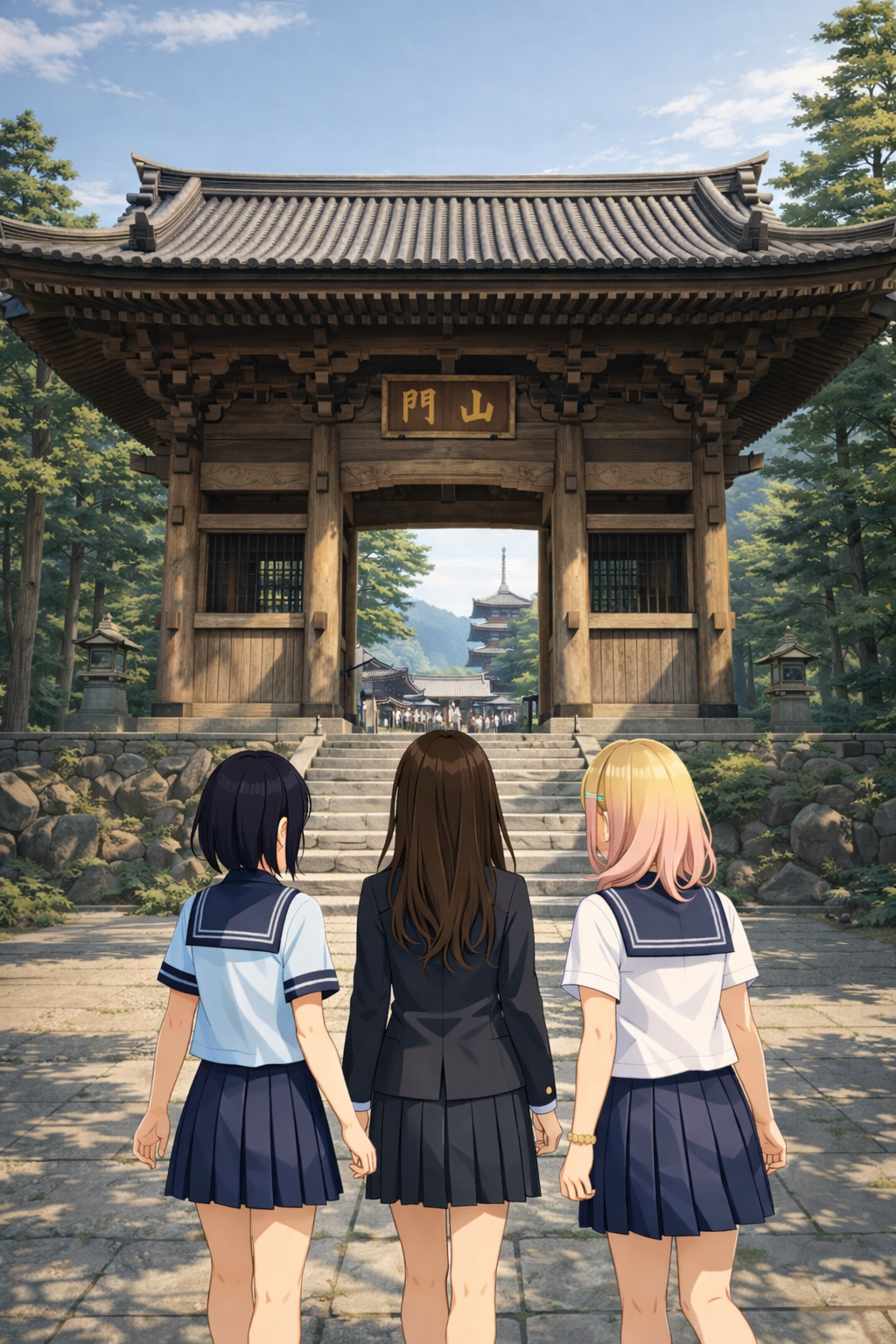
The sanmon gate marking the entrance to a Buddhist temple in Japan.
The architectural difference reflects a deeper religious difference.
Shrines belong to Shinto, Japan's indigenous spiritual tradition.
Shinto centers on kami, spiritual presences connected to nature, places, and ancestors.
Rituals often focus on:
- purification
- seasonal festivals
- harmony with the environment
Temples belong to Buddhism, which arrived in Japan from the Asian mainland in the 6th century.
Buddhism focuses on philosophical questions such as:
- suffering
- impermanence
- enlightenment
This difference explains why temples often contain statues of the Buddha and spaces designed for meditation. While shrines emphasize nature and local spirits, temples emphasize spiritual understanding and inner reflection.
3. Anime Examples
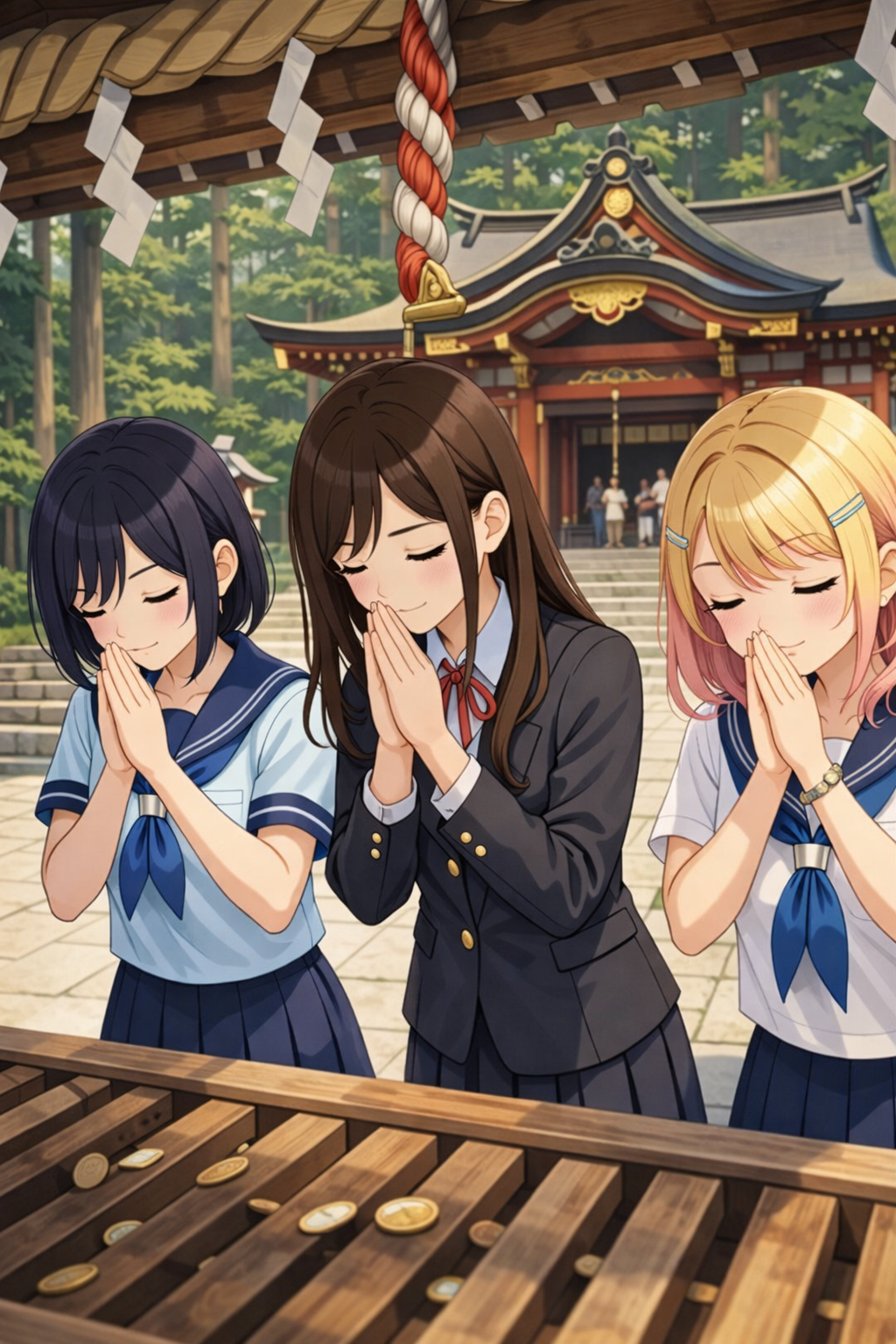
Visitors praying and offering coins at a traditional Japanese shrine.
Anime frequently uses both shrines and temples as settings.
Shrines often appear in scenes involving:
- festivals
- supernatural encounters
- local traditions
Temple settings, by contrast, often appear in stories involving:
- monks
- training or reflection
- historical settings
Because these places appear so frequently in anime, many viewers become familiar with them long before visiting Japan. However, without cultural context, the difference between them may remain unclear.
4. Why They Mix in Japanese Culture
One reason the distinction can feel confusing is that the two traditions have coexisted in Japan for centuries.
Historically, shrines and temples were often built close together, and their practices sometimes overlapped.
Because of this long history, Japanese people often interact with both traditions naturally.
For example:
A person might visit a shrine for New Year prayers but attend a Buddhist temple for funerals.
Rather than choosing one religion exclusively, Japanese culture has traditionally allowed both to exist side by side.
This coexistence is one of the reasons shrines and temples can appear similar — even though their meanings are quite different.
5. How to Tell Them Apart Quickly
If you are visiting Japan and want a quick way to identify them, a few visual clues help.
A torii gate almost always indicates a shrine.
Shrines also often have purification basins where visitors wash their hands before entering.
Temples, by contrast, usually feature large halls containing Buddhist statues and incense burners where visitors place lit incense.
If you see people lighting incense in front of a statue of Buddha, you are most likely at a Buddhist temple.
If you see people bowing, clapping their hands, and praying in front of a wooden shrine building, you are most likely at a Shinto shrine.
6. How Japanese People Use Them in Daily Life

Visitors offering incense at a Buddhist temple in Japan.
Another way to understand the difference is by looking at how Japanese people use these places in everyday life.
In general, celebrations and blessings are often associated with shrines.
Examples include:
- New Year visits (Hatsumōde)
- children's celebration rituals such as Shichi-Go-San
- purification rituals (oharai)
- prayers for success, health, or safety
These ceremonies are typically conducted by Shinto priests at shrines.
Temples, on the other hand, are more often associated with memorials and reflection.
Examples include:
- funerals
- Obon, the summer period when families honor ancestral spirits
- the New Year's Eve bell ringing (Joya no Kane)
In everyday Japanese life, shrines are often connected to celebration and protection, while temples are connected to remembrance and reflection.
Why Anime Uses Both So Naturally
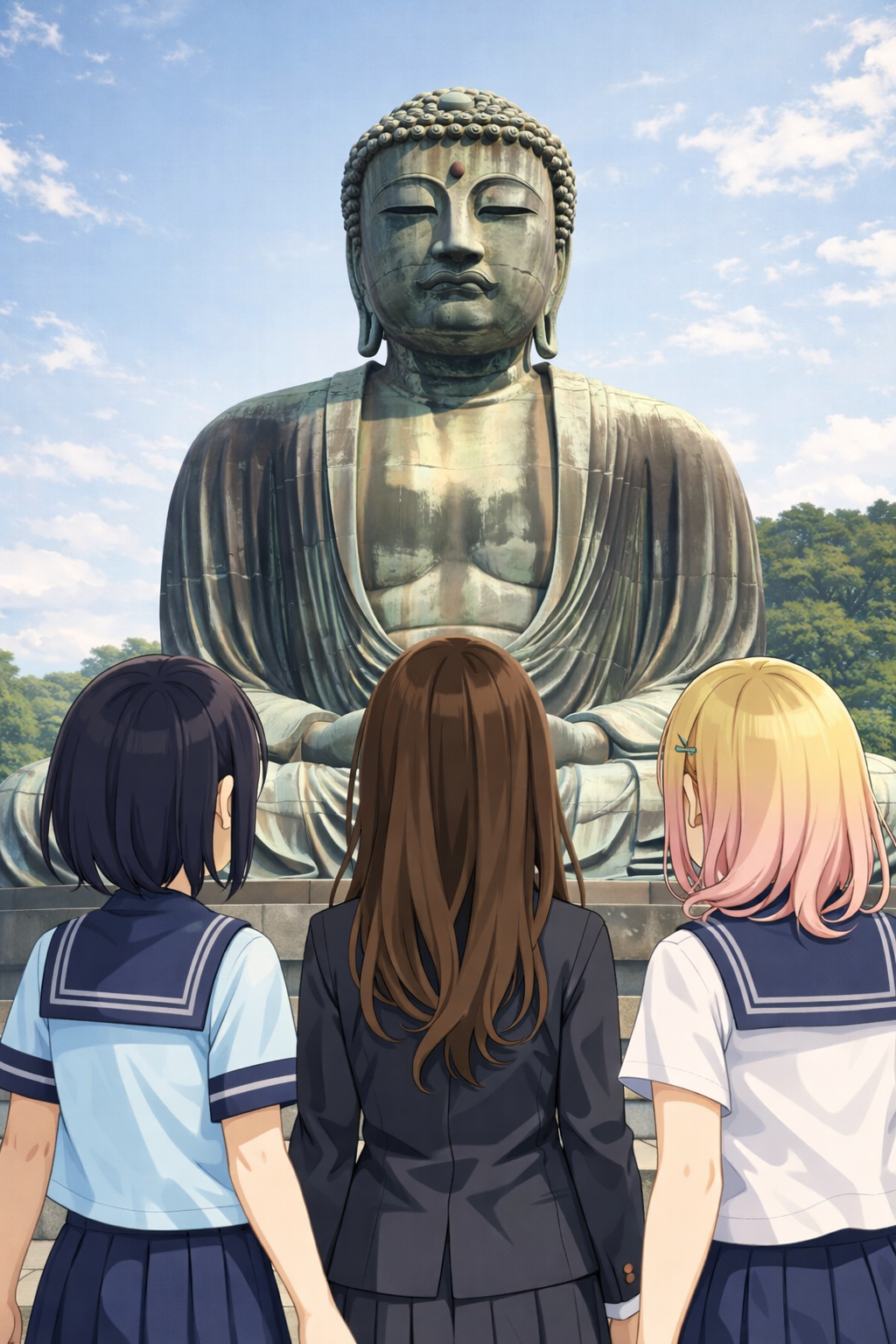
The Great Buddha statue at a Buddhist temple in Japan.
One reason shrines and temples feel so natural in anime is that they are simply part of everyday Japanese life.
Students pass shrines on their way to school. Families visit temples during holidays. Festivals, prayers, memorials, and seasonal traditions all take place in these spaces.
Because these places are familiar parts of daily life in Japan, anime often includes them without explanation.
For international viewers, understanding the difference between shrines and temples reveals a deeper layer of Japanese culture behind many scenes in anime.